


Color LogoLoading...

🌍 Feed

✍🏿 Compose

How NEMT Scheduling Software Helps in Resource Allocation

NEMT Cloud Dispatch

Cloud-Based NEMT Software for NEMT Dispatching, NEMT Scheduling, Routing, Invoicing and Billing, Fleet Management, HR Management, GPS Tracking, Driver App, Brokerage Management, Trip Management, etc.  Dec 26, 2024
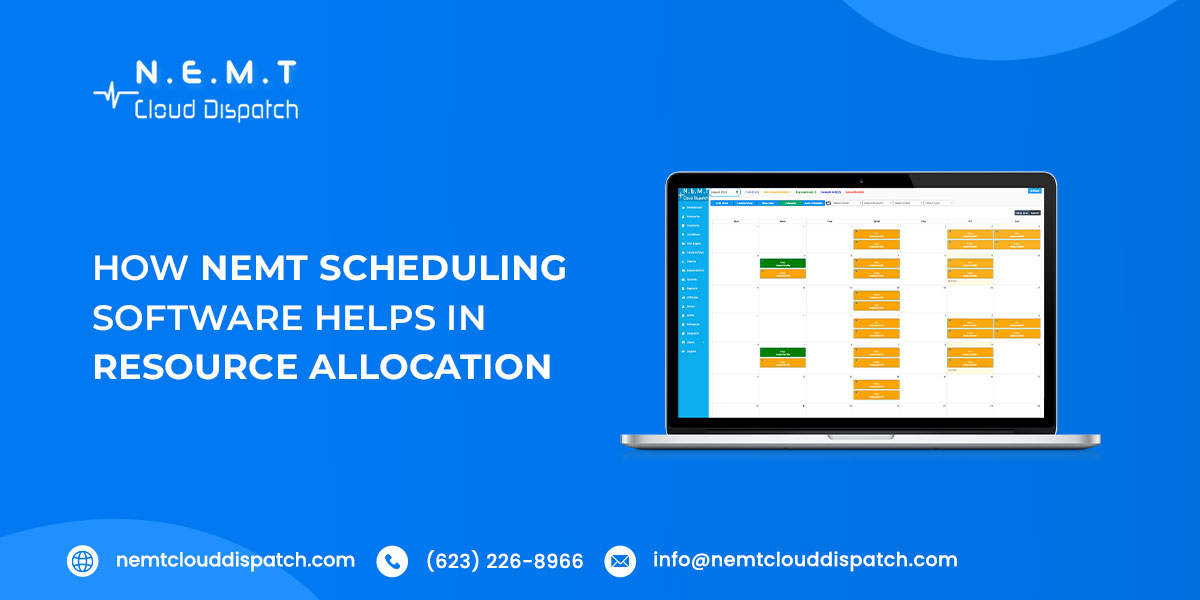
How NEMT Scheduling Software Helps in Resource Allocation


In today's fast-paced world, ensuring the efficient allocation of resources is a critical task for any transportation service, especially within the Non-Emergency Medical Transportation (NEMT) industry. With increasing demand for medical transportation, especially for vulnerable populations, the efficient management of resources—such as vehicles, drivers, and schedules—becomes increasingly complex. This is where NEMT scheduling software plays a vital role. Let’s dive into how automated systems like these are transforming resource allocation in NEMT services.

Understanding NEMT Scheduling Software

NEMT scheduling software is a tool designed to streamline the management of medical transport. Whether it’s for a routine doctor’s appointment, a dialysis session, or any other non-emergency medical transportation need, these systems help optimize routes, manage drivers, and ensure timely transportation for patients. The software typically integrates multiple functions such as vehicle management, driver scheduling, customer booking, and billing into one seamless platform.

How NEMT Scheduling Software Improves Resource Allocation

1. Automation of Scheduling Tasks

One of the primary benefits of NEMT scheduling software is automation. Traditionally, scheduling was a manual process, which could lead to errors, inefficiencies, and delays. With automated NEMT scheduling software, businesses can automate the entire scheduling process. This ensures that resources like drivers and vehicles are allocated more efficiently, saving time and reducing errors. Instead of relying on manual input, the software automatically assigns the right vehicle and driver based on availability and proximity to the pickup point.

2. Optimizing Vehicle Usage

NEMT services often have a limited number of vehicles, and ensuring that these vehicles are being used optimally is crucial. NEMT vehicle scheduling software helps businesses allocate the right vehicle to the right trip, based on factors like the distance to be traveled, the size of the vehicle, and the patient's medical needs. By utilizing real-time data and historical patterns, the software ensures that no vehicle is underutilized or overbooked.

3. Reducing Operational Costs

Effective resource allocation directly impacts the bottom line. By using automated NEMT scheduling software, companies can reduce operational costs significantly. The software helps eliminate inefficient routes, unnecessary waiting times, and scheduling conflicts. It also helps reduce fuel consumption by choosing the most efficient routes. These small but impactful changes add up, leading to substantial cost savings over time.

4. Real-Time Tracking and Adjustments

One of the challenges in NEMT services is the need for real-time adjustments due to unforeseen circumstances, such as traffic delays or last-minute changes in the patient's schedule. With transportation scheduling software, businesses can track vehicles in real time and make immediate adjustments to routes or schedules as needed. This ensures that resources are always being allocated in the most efficient manner, regardless of disruptions.

5. Enhanced Driver Management

Managing a fleet of drivers can be a complex task, especially when dealing with various shifts and availability. NEMT scheduling software allows businesses to efficiently allocate drivers based on their availability, skill set, and proximity to the pick-up points. By automating this process, companies can avoid scheduling conflicts and ensure that each driver is used optimally without overworking them.

6. Integration with Other Systems

Many NEMT services rely on multiple systems to handle various aspects of the business, such as billing, customer service, and dispatch. Medical transportation scheduling software can integrate with these other platforms, ensuring that resources are allocated based on a full picture of the service. For example, once a ride is scheduled, the software can automatically generate billing information, helping streamline both scheduling and administrative tasks.

7. Improved Customer Satisfaction

When resources are allocated more efficiently, customers benefit from timely service. Ambulance scheduling software and NEMT systems ensure that patients are not left waiting for their transport, and they are picked up on time, every time. This leads to improved customer satisfaction and trust in the service provider, which is crucial for maintaining a loyal client base.

Key Features of NEMT Scheduling Software for Effective Resource Allocation

1. Real-Time Scheduling Updates

With real-time updates, companies can adjust schedules on the fly, making it easier to handle sudden changes like urgent appointments or cancellations.

2. Route Optimization

By using route optimization, the software helps reduce fuel costs, improve travel times, and ensure that vehicles are used efficiently.

3. Vehicle and Driver Availability

The software keeps track of vehicle and driver availability, ensuring that resources are allocated based on real-time data.

4. Integration with Billing and CRM

Most modern NEMT scheduling software integrates with customer relationship management (CRM) and billing systems, making it easier to manage everything in one place.

Why Choose NEMT Cloud Dispatch for Your Scheduling Needs?

When it comes to NEMT scheduling software, NEMT Cloud Dispatch offers an excellent solution for businesses looking to optimize their resource allocation. With advanced features like automated scheduling, real-time tracking, and route optimization, NEMT Cloud Dispatch helps you streamline operations, reduce costs, and improve overall service quality. Whether you’re looking for automated NEMT scheduling software, medical transportation scheduling software, or NEMT vehicle scheduling software, our platform is designed to meet all your scheduling needs with efficiency and precision.

The Future of NEMT Resource Allocation

As the demand for NEMT services continues to grow, leveraging advanced scheduling software will become increasingly important. These systems offer not just better resource allocation but also improved patient outcomes by ensuring timely and reliable transport.

By automating and optimizing scheduling tasks, businesses can focus on providing the best possible service to their clients. Whether you're a new NEMT provider or looking to upgrade your existing systems, investing in NEMT scheduling software can set you on the path to greater operational efficiency and customer satisfaction.

Conclusion

In summary, NEMT scheduling software plays a critical role in improving the efficiency and effectiveness of resource allocation for transportation services. From automating scheduling tasks to optimizing vehicle use, these software solutions help reduce costs and enhance service delivery. By adopting platforms like NEMT Cloud Dispatch, companies can unlock the full potential of their resources, ensuring that patients receive the timely and reliable transportation they deserve.

Frequently Asked Questions (FAQs)

1. What is NEMT scheduling software?
NEMT scheduling software is a platform designed to automate and optimize the scheduling of non-emergency medical transportation, ensuring efficient resource allocation.

2. How does NEMT scheduling software reduce costs?
By optimizing routes, reducing fuel consumption, and eliminating inefficiencies, NEMT scheduling software helps reduce operational costs.

3. Can NEMT scheduling software integrate with other systems?
Yes, most NEMT scheduling software, like NEMT Cloud Dispatch, integrates with billing, CRM, and other business systems to streamline operations.

4. Is NEMT scheduling software easy to use?
Yes, NEMT scheduling software is designed to be user-friendly, with intuitive interfaces and easy-to-follow features.

5. Why should I choose NEMT Cloud Dispatch for my scheduling needs?
NEMT Cloud Dispatch offers comprehensive features like real-time tracking, route optimization, and automated scheduling to help you manage your NEMT services efficiently and reduce costs.

Top comments(0)

SEND

You may like this too...

While skyscraper demolitions and massive industrial clearouts dominate headlines, a significant portion of Toronto's demolition work happens at a more human scale. Residential properties undergoing transformation—whether for custom home construction, lot consolidation, or redevelopment—require demolition that differs fundamentally from commercial projects. Within this residential context, fences and outbuildings present unique challenges that demand specialized attention. These seemingly simple structures, often overlooked in demolition planning, can become sources of delay, dispute, and unexpected cost when not handled properly. Toronto's leading demolition contractors have developed expertise in residential work that encompasses everything from garden sheds to pool houses, from property line fences to detached garages, approaching each with the same professionalism applied to million-square-foot office towers.

Surveying and Property Line Verification

Before any fence comes down or outbuilding is touched, the demolition contractor must know exactly where property lines lie—a requirement that sounds simpler than it proves in practice. Toronto's residential neighborhoods feature properties subdivided decades or even centuries ago, with fence lines that may or may not align with legal boundaries. A fence standing for fifty years might sit feet inside the actual property line, creating an easement by prescription that complicates removal. An outbuilding might encroach on neighboring land, triggering obligations that extend beyond simple demolition. Experienced residential demolition contractors begin every project with professional surveys that verify boundaries against current records, supplemented by title searches when necessary. This investment in verification prevents the neighbor disputes that erupt when fences come down and suddenly everyone can see where the legal line actually runs.

Neighbor Relations and Notification Requirements

Fences, by their nature, exist at the intersection of properties—structures shared between neighbors even when ownership technically rests with one party. Removing a fence without proper notification and agreement invites conflict that can stop projects cold. Toronto's demolition professionals understand this reality and implement communication protocols that prevent disputes before they arise. They verify municipal requirements for neighbor notification, which may exceed standard demolition permit conditions. They facilitate conversations between property owners when agreement about fence removal or replacement proves necessary. They document existing conditions through photographs shared with neighbors, establishing baseline records that protect against claims of damage to adjacent properties. This attention to neighbor relations transforms potential adversaries into informed participants in the demolition process, reducing conflict and keeping projects moving.

Utility Locating in Outbuilding Demolition

Outbuildings—garages, sheds, pool houses, workshops—often connect to utilities in ways that main structures do not. A detached garage may have underground electrical service running from the house, its location known to no one who remains on the property. A pool house likely contains plumbing connections that extend beneath the yard, tying into systems that serve the main residence. A garden shed might sit above a forgotten septic system or abandoned well. Demolishing these structures without first locating and disconnecting utilities risks striking live lines, releasing sewage, or creating hazards that endanger workers and neighbors. Residential demolition experts employ utility locators who trace every buried line, supplemented by ground-penetrating radar when records prove inadequate. They coordinate disconnections with utility providers, ensuring that services are properly terminated before demolition begins.

Selective Removal and Salvage Opportunities

Residential outbuildings often contain materials and features worth preserving, and demolition contractors with experience in this niche recognize salvage opportunities that others miss. A detached garage might house vintage doors sought by architectural salvage dealers. A pool house could contain tile or fixtures valuable to renovation projects. Even the framing lumber in an old shed, milled from old-growth timber, may command premium prices from specialty buyers. Contractors who understand these markets offer clients options for salvage that offset demolition costs while diverting materials from landfill. They maintain relationships with salvage dealers who provide competitive pricing and reliable removal. They schedule work to accommodate selective deconstruction that preserves valuable elements while maintaining project timelines.

Boundary Demolition Techniques

Removing structures that sit on or near property lines requires techniques that protect neighboring properties while allowing complete demolition of the target structure. Fences attached to shared posts demand careful disassembly that leaves the neighbor's portion undisturbed when ownership is shared. Outbuildings built tight to property lines require demolition from within, with equipment operating entirely on the subject property while reaching every part of the structure. Foundation removal adjacent to neighbor's landscaping demands precision excavation that preserves plantings and hardscaping while extracting below-grade concrete. These boundary techniques reflect understanding that residential demolition occurs within a context of ongoing relationships, where damage to a neighbor's property creates conflict that extends far beyond the cost of repair.

Debris Management in Tight Spaces

Residential properties, particularly in Toronto's older neighborhoods, often feature limited access that complicates debris removal from outbuilding demolition. A garage at the rear of a deep lot may require debris to travel through the entire property, past the main house, to reach street-level containers. A pool house accessed only by narrow side yards may demand hand-carrying of materials impossible for equipment to reach. Contractors experienced in residential demolition Toronto work plan for these constraints before demolition begins, establishing debris pathways that protect landscaping and hardscaping. They use smaller equipment capable of navigating tight spaces when possible. They employ hand crews for portions inaccessible to machines. They sequence demolition to maintain access throughout the process, ensuring that debris removal never blocks the path required for subsequent work.

Site Restoration and Clean Completion

Residential demolition concludes not when structures are down but when the site is ready for whatever comes next—whether new construction, landscaping, or simply a clean slate. This expectation drives restoration requirements that exceed commercial project standards. Lawns disturbed by equipment access must be reseeded or sodded. Hardscaping removed for demolition access must be repaired or replaced. Debris that would be acceptable on a commercial site—small fragments, minor scatter—must be eliminated entirely from residential properties where children will play and families will gather. Contractors who excel in residential demolition budget time and resources for this final restoration, understanding that a clean finish matters more to residential clients than to any other customer. They inspect sites with clients before final acceptance, addressing any concerns and ensuring that the demolition phase concludes with relationships intact and reputations enhanced.

James Lucas

Mar 14, 2026

While skyscraper demolitions and massive industrial clearouts dominate headlines, a significant portion of Toronto's demolition work happens at a more human scale. Residential properties undergoing transformation—whether for custom home construction, lot consolidation, or redevelopment—require demolition that differs fundamentally from commercial projects. Within this residential context, fences and outbuildings present unique challenges that demand specialized attention. These seemingly simple structures, often overlooked in demolition planning, can become sources of delay, dispute, and unexpected cost when not handled properly. Toronto's leading demolition contractors have developed expertise in residential work that encompasses everything from garden sheds to pool houses, from property line fences to detached garages, approaching each with the same professionalism applied to million-square-foot office towers.

Surveying and Property Line Verification

Before any fence comes down or outbuilding is touched, the demolition contractor must know exactly where property lines lie—a requirement that sounds simpler than it proves in practice. Toronto's residential neighborhoods feature properties subdivided decades or even centuries ago, with fence lines that may or may not align with legal boundaries. A fence standing for fifty years might sit feet inside the actual property line, creating an easement by prescription that complicates removal. An outbuilding might encroach on neighboring land, triggering obligations that extend beyond simple demolition. Experienced residential demolition contractors begin every project with professional surveys that verify boundaries against current records, supplemented by title searches when necessary. This investment in verification prevents the neighbor disputes that erupt when fences come down and suddenly everyone can see where the legal line actually runs.

Neighbor Relations and Notification Requirements

Fences, by their nature, exist at the intersection of properties—structures shared between neighbors even when ownership technically rests with one party. Removing a fence without proper notification and agreement invites conflict that can stop projects cold. Toronto's demolition professionals understand this reality and implement communication protocols that prevent disputes before they arise. They verify municipal requirements for neighbor notification, which may exceed standard demolition permit conditions. They facilitate conversations between property owners when agreement about fence removal or replacement proves necessary. They document existing conditions through photographs shared with neighbors, establishing baseline records that protect against claims of damage to adjacent properties. This attention to neighbor relations transforms potential adversaries into informed participants in the demolition process, reducing conflict and keeping projects moving.

Utility Locating in Outbuilding Demolition

Outbuildings—garages, sheds, pool houses, workshops—often connect to utilities in ways that main structures do not. A detached garage may have underground electrical service running from the house, its location known to no one who remains on the property. A pool house likely contains plumbing connections that extend beneath the yard, tying into systems that serve the main residence. A garden shed might sit above a forgotten septic system or abandoned well. Demolishing these structures without first locating and disconnecting utilities risks striking live lines, releasing sewage, or creating hazards that endanger workers and neighbors. Residential demolition experts employ utility locators who trace every buried line, supplemented by ground-penetrating radar when records prove inadequate. They coordinate disconnections with utility providers, ensuring that services are properly terminated before demolition begins.

Selective Removal and Salvage Opportunities

Residential outbuildings often contain materials and features worth preserving, and demolition contractors with experience in this niche recognize salvage opportunities that others miss. A detached garage might house vintage doors sought by architectural salvage dealers. A pool house could contain tile or fixtures valuable to renovation projects. Even the framing lumber in an old shed, milled from old-growth timber, may command premium prices from specialty buyers. Contractors who understand these markets offer clients options for salvage that offset demolition costs while diverting materials from landfill. They maintain relationships with salvage dealers who provide competitive pricing and reliable removal. They schedule work to accommodate selective deconstruction that preserves valuable elements while maintaining project timelines.

Boundary Demolition Techniques

Removing structures that sit on or near property lines requires techniques that protect neighboring properties while allowing complete demolition of the target structure. Fences attached to shared posts demand careful disassembly that leaves the neighbor's portion undisturbed when ownership is shared. Outbuildings built tight to property lines require demolition from within, with equipment operating entirely on the subject property while reaching every part of the structure. Foundation removal adjacent to neighbor's landscaping demands precision excavation that preserves plantings and hardscaping while extracting below-grade concrete. These boundary techniques reflect understanding that residential demolition occurs within a context of ongoing relationships, where damage to a neighbor's property creates conflict that extends far beyond the cost of repair.

Debris Management in Tight Spaces

Residential properties, particularly in Toronto's older neighborhoods, often feature limited access that complicates debris removal from outbuilding demolition. A garage at the rear of a deep lot may require debris to travel through the entire property, past the main house, to reach street-level containers. A pool house accessed only by narrow side yards may demand hand-carrying of materials impossible for equipment to reach. Contractors experienced in residential demolition Toronto work plan for these constraints before demolition begins, establishing debris pathways that protect landscaping and hardscaping. They use smaller equipment capable of navigating tight spaces when possible. They employ hand crews for portions inaccessible to machines. They sequence demolition to maintain access throughout the process, ensuring that debris removal never blocks the path required for subsequent work.

Site Restoration and Clean Completion

Residential demolition concludes not when structures are down but when the site is ready for whatever comes next—whether new construction, landscaping, or simply a clean slate. This expectation drives restoration requirements that exceed commercial project standards. Lawns disturbed by equipment access must be reseeded or sodded. Hardscaping removed for demolition access must be repaired or replaced. Debris that would be acceptable on a commercial site—small fragments, minor scatter—must be eliminated entirely from residential properties where children will play and families will gather. Contractors who excel in residential demolition budget time and resources for this final restoration, understanding that a clean finish matters more to residential clients than to any other customer. They inspect sites with clients before final acceptance, addressing any concerns and ensuring that the demolition phase concludes with relationships intact and reputations enhanced.

James Lucas

Mar 14, 2026

The moment your Opret aps selskab is officially registered and you hold that CVR number in your hands is a significant achievement worthy of celebration. However, experienced entrepreneurs know that formation is not the finish line but rather the starting point of your real journey. What you do in the days and weeks following registration can substantially impact your company's trajectory, determining whether you build on a solid foundation or create complications that will need fixing later. The team at Flexum has observed hundreds of founders navigate this post-formation period, and their collective experience reveals clear patterns about which steps matter most. From establishing financial infrastructure to building professional relationships and working toward full ownership, the actions you take now set the stage for everything that follows. This guide walks you through the essential steps every new ApS owner should prioritize after formation, helping you start your corporate journey on the right foot.

Open Your Dedicated Business Bank Account

The very first practical step after receiving your CVR number should be opening a business bank account in your company's name. This might seem administrative, but it is actually fundamental to maintaining the legal separation that makes your ApS structure valuable. When you conduct business through a personal account, you blur the line between personal and company finances, potentially undermining the liability protection you worked to establish. Banks will require your registration documents, your CVR number, and identification for all directors and beneficial owners. Some banks may request a business plan or explanation of your expected transactions, particularly if your business involves higher-risk activities or international operations. Shop around if necessary, as different banks offer different fee structures and service levels for business customers. Once your account is open, commit to using it exclusively for business transactions. Every invoice payment, every expense, every transfer should pass through this account, creating a clean financial trail that simplifies bookkeeping, tax preparation, and the eventual share transfer process with Flexum.

Establish Your Bookkeeping and Accounting Systems

With your bank account in place, the next priority is establishing systems for tracking your company's financial activities. Proper bookkeeping is not merely a compliance requirement but a essential management tool that gives you visibility into your business's performance. You have several options ranging from DIY software like Dinero or e-conomic to hiring a part-time bookkeeper or engaging a full-service accounting firm. The right choice depends on your comfort with numbers, the complexity of your transactions, and your budget. At minimum, you need a system that records all income and expenses, tracks VAT if you are registered, and produces the reports needed for your annual financial statements. Many founders find that investing in professional accounting support from the beginning pays for itself through tax savings and peace of mind. Your accountant can also advise you on tax planning, deductible expenses, and compliance deadlines you might otherwise miss. The Flexum team encourages new founders to view this not as an expense but as an investment in their company's financial health.

Register for Relevant Taxes with SKAT

Depending on the nature of your business, you may need to register for various taxes with the Danish tax authority. Most businesses with expected turnover exceeding 50,000 DKK within a twelve-month period must register for VAT (moms), which involves charging VAT on your sales, filing periodic VAT returns, and remitting collected VAT to SKAT. If you have employees, you must register as an employer and handle A-skat and AM-bidrag withholding and reporting. Some industries have specific tax registrations or excise duties that apply. Your accountant can guide you through these requirements, but ultimately the responsibility rests with you as director to ensure your company meets all its tax obligations. Failing to register when required can result in penalties and interest, so addressing this promptly after formation is essential. Even if your business is not yet generating revenue, understanding what registrations will be triggered as you grow allows you to plan ahead and avoid surprises when you cross various thresholds.

Set Up Your Invoicing and Contract Templates

With your financial infrastructure established, turn your attention to the documents you will use to conduct business. Professional invoicing and contract templates communicate that you are a serious enterprise and protect your interests in commercial relationships. Your invoices should include your company name, address, CVR number, VAT number if applicable, clear payment terms, and a professional design that reflects your brand. Accounting software typically includes invoice templates you can customize, making this step straightforward. For contracts, consider what types of agreements you will commonly enter: client service agreements, supplier contracts, employment agreements, or partnership documents. While you can find templates online, having a lawyer review your key contracts is often money well spent, particularly if your business involves significant liability or complex obligations. Well-drafted contracts prevent misunderstandings, establish clear expectations, and provide protection if disputes arise. Taking time to get these documents right now saves countless headaches later when you are busy serving clients and growing your business.

Build Your Professional Advisory Network

No entrepreneur succeeds entirely alone, and the weeks after formation are an ideal time to build relationships with professionals who can support your journey. In addition to your accountant, consider identifying a lawyer who understands your industry, a banker who can advise on financing options, and perhaps a mentor or business advisor who has walked the path before you. These relationships need not involve retainers or ongoing fees; simply knowing who to call when questions arise provides confidence and security. Attend industry events, join relevant business networks, and connect with other entrepreneurs who can share their experiences. The Danish startup ecosystem is remarkably supportive, and many successful founders are generous with their time and advice. Building your network now means you have resources to draw upon when challenges emerge or opportunities arise that require quick action. The Flexum team remains available for questions related to your formation and path to ownership, but for the broader journey, cultivating a diverse advisory team serves you well.

Begin Working Toward Your Share Transfer Milestone

For founders who formed their ApS through Flexum, the post-formation period also marks the beginning of your journey toward full ownership. Every profitable transaction, every smart business decision, and every kroner you retain in the company builds equity that brings you closer to the share transfer threshold. This creates positive alignment between your daily efforts and your long-term ownership goals. Keep clean financial records so that your equity growth is clearly documented and verifiable. Understand the terms of your shareholder agreement and what specific conditions trigger the share transfer. As your company approaches the threshold, the Flexum team will guide you through the transfer process, which is designed to be straightforward and minimally disruptive. When the transfer completes, you become the full legal owner of all shares, and your relationship with Flexum concludes naturally. At that moment, you stand as the complete owner of a professionally established company, ready to pursue whatever opportunities lie ahead with full independence and control.

James William

Mar 14, 2026

Every journey begins with power. 


Whether you're exploring Rwanda's breathtaking landscapes or navigating your daily commute, Kabisa keeps you moving forward without limits. Our nationwide charging network means adventure is always within reach—no more range anxiety, just pure electric freedom.


From Kigali to Rubavu, Musanze to Huye, ultra-fast charging stations are ready when you are. Your electric vehicle isn't just transportation; it's your gateway to discovering Rwanda differently. Fully charged today, everywhere tomorrow.


Ready to go further?📞 Call 6420 

🌐 Visit www.gokabisa.com

📧 Email sales@gokabisa.com


#GoKabisa #ElectricVehiclesRwanda #EVChargingRwanda #RwandaEV #ElectricCarsKigali #ChargingNetworkRwanda #SustainableMobilityRwanda #EVInfrastructureEastAfrica #ElectricMobilityEastAfrica #EastAfricaEV #CleanEnergyRwanda #ZeroEmissionsRwanda #EVChargingEastAfrica #GreenTransportRwanda #ElectricFutureEastAfrica


GOKABISA

Oct 2, 2025

Your competitors are still spending thousands on diesel every month.


You could be saving up to 80% on fuel costs while doing the exact same work, or even more work.


This is what makes the RD6 different:


💪 450kg Cargo Capacity: Haul materials, tools, and equipment.
⚡ Up to 560km Range: Kigali to Rubavu and back on a single charge.
🔋 V2V Charging: Power other vehicles or job site equipment directly from your truck.
⏱️ 30-minute Fast Charging: Lunch break = full charge.


Car’s specifications:

  • Running cost: 1,325 RWF per 100km.
  • 272 horsepower: More power than most diesel pickups.
  • 70L front trunk PLUS 450kg bed capacity.
  • Advanced safety: Lane departure warning, collision prevention, and traffic sign recognition.

Perfect For:


✅ Construction companies cutting fuel costs.
✅ Agricultural businesses needing reliable transport.
✅ Delivery services wanting to save on operating costs.


The Geely Riddar RD6: Proof that electric vehicles can handle real work.


Call 6420 | sales@gokabisa.com | www.gokabisa.com


#ElectricPickup #Rwanda #ElectricVehicles #BusinessVehicles #CommercialEV #GeelyRiddar #ElectricTruck #Kabisa #FleetVehicles #BusinessTransport #EVRwanda #CommercialVehicles #EastAfrica #Wazoplus

GOKABISA

Sep 30, 2025

Introduction: SDGs Are Closer Than You Think


The United Nations Sustainable Development Goals (SDGs) are often seen as global policies far removed from daily life. But the truth is, everyday actions have the power to drive measurable impact. From the way we commute to how we shop, eat, and work, every decision can either support or hinder progress toward a sustainable, equitable world.

Platforms like WazoPlus are helping bridge this gap by turning knowledge into actionable steps that anyone can implement.


Step 1: Sustainable Consumption & Energy


Practical Actions:

  • Reduce energy use at home: turn off lights and unplug devices when not in use. (SDG 7: Affordable & Clean Energy).
  • Choose locally-produced goods and ethical brands to reduce carbon footprint. (SDG 12: Responsible Consumption & Production).
  • Support circular economy initiatives: recycle, upcycle, and donate unused items.

Why it matters: Small changes in consumption patterns collectively reduce emissions, create demand for sustainable products, and encourage corporate responsibility.


Step 2: Safe & Conscious Transport


Practical Actions:

  • Walk, cycle, or use public transport whenever possible. (SDG 11: Sustainable Cities & Communities)
  • Support safe driving practices: advocate for licensed drivers and vehicle safety checks. (SDG 3: Good Health & Wellbeing)
  • Carpool or share rides to reduce traffic congestion and emissions.

Why it matters: Safer, greener transportation prevents accidents, reduces environmental impact, and promotes healthier communities.


Step 3: Ethical Work & Fair Practices


Practical Actions:

  • Treat domestic workers, colleagues, and service providers with fairness and respect. (SDG 5: Gender Equality + SDG 8: Decent Work & Economic Growth)
  • Support small businesses and local entrepreneurs.
  • Volunteer or mentor in your community to transfer skills and knowledge.

Why it matters: Fair treatment, inclusion, and support for local enterprise drive community resilience and economic growth.


Step 4: Community Engagement & Advocacy


Practical Actions:

  • Participate in community cleanups or sustainability initiatives. (SDG 13: Climate Action + SDG 11)
  • Advocate for local policies that protect health, education, and equality.
  • Share knowledge online: amplify actionable content like WazoPlus guides.(Read them if not familiar with them in the LTWE Newsletter.)

Why it matters: Informed, engaged citizens become drivers of systemic change, turning abstract goals into tangible results.


Case Study: Rwanda in Action


In Rwanda, local communities are already leading by example:

  • Neighborhood recycling programs reduce waste while creating jobs.
  • Youth-led tech startups teach sustainable practices through apps and workshops.
  • Community transport cooperatives ensure safer, greener, and affordable mobility.

These are real-world applications of the SDGs, showing that local action drives global impact.


Looking Ahead: Make the SDGs Your Daily Practice


Every choice you make from what you buy, how you move, how you work, and how you engage,has the potential to contribute to a sustainable, equitable future. By turning insight into action, citizens everywhere can make SDGs not just a policy framework, but a lived reality.


Call to Action:


Start today: pick one small action from this guide and implement it this week. 

Share your results with your community and inspire others.

Remember: Global change starts locally. Every empowered citizen is a spark.

One 


Windy Mpamo,MBA.

Sep 27, 2025

Let's be honest, this was YOUR biggest concern too, right?


Here's what most people don't know:


Electric vehicles actually need LESS maintenance than regular cars.


But when they do need service, you want someone who truly understands EV technology.


Meet Rwanda's first EV-specialized diagnostic bay:

  1. System Diagnostics: We read your car's "health report" like medical experts.
  2. Software Updates: Keep your EV running with the latest and most efficient programs.
  3. Brake & Suspension Checks: EVs are heavier, so we check what matters most.
  4. Battery Health Monitoring: We track your battery's condition before any problems arise.
  5. Charging System Inspection: Ensure your car charges efficiently.
  6. Complete Battery Services: Maintenance or replacements, we've got you covered


Our technicians at Kabisa are trained specifically on electric vehicle systems, with specialized tools that regular garages simply don't have.


Stop letting maintenance anxiety hold you back from going electric.


With Kabisa's EV-specialized garage, your electric vehicle is in expert hands.


Your EV deserves expert care. Trust Rwanda's EV maintenance specialists.


Call 6420 | sales@gokabisa.com | www.gokabisa.com


#EVMaintenance #ElectricVehicles #Rwanda #CarService #EVDiagnostics #ElectricMobility #Kabisa #AutoMaintenance #ElectricCarService #EVSupport #ElectricVehicleService #EVCare #Wazoplus

GOKABISA

Sep 26, 2025

Remember when people said electric cars wouldn't work here because "where will you charge them?"


Well, those days are officially over.


Kabisa's nationwide charging network is now live across Rwanda and here's why this changes everything:


✅ Strategic locations everywhere.

✅Major business routes covered.

✅All mapped on Google Maps for easy access.

✅24/7 Availability.


No more planning your day around charging hours.


Whether it's early morning deliveries or late-night travels, our chargers are always ready when you are.


This is what happens when an African company builds infrastructure that actually fits how people move and live.


Ready to power your journey?


Your nearest Kabisa charging station is closer than you think.


Kabisa - Charge Quickly & Safely Across Rwanda.


Call 6420 | sales@gokabisa.com | www.gokabisa.com


#ElectricVehicles #Rwanda #EVCharging #ElectricMobility #Innovation #EastAfrica #BusinessSolutions #FleetManagement #GreenTransport #Kabisa #ElectricFuture

GOKABISA

Sep 24, 2025

Still thinking electric vehicles are too complicated for your family?

Let me change your mind.


The BYD Yuan Up is designed for families in Rwanda who want to join the electric movement, and provide their families with optimal comfort.


What Your Family Car Needs To Contain:


301 km range: Perfect for Kigali-Musanze round trips.
5 seats, 4 doors: Room for the whole family plus groceries.
330L storage space: Weekend getaways? It has all the storage space you need.
Multiple safety features: Airbags, surround camera and parking radar.


Your friends might tell you to "just buy a RAV4," but the secret is, this electric SUV costs just 1,025 RWF per 100km to run.


That's pocket change compared to fuel costs. Imagine the savings!


Plus, with Kabisa's nationwide charging network available 24/7, range anxiety becomes a thing of the past.


Perfect for first-time EV buyers who want style, practicality, and to save money in fuel cost.


So, if you're a growing family needing reliable daily transport, the Yuan Up delivers.


Ready to experience the future of mobility?


Our ultra-fast chargers are now live and mapped on Google Maps for easy access.


Kabisa - Your trusted EV ecosystem. Vehicles, charging, maintenance - all in one place.


Call 6420 | sales@gokabisa.com | www.gokabisa.com


#ElectricVehicles #Rwanda #EVCharging #ElectricMobility #Innovation #EastAfrica #BusinessSolutions #FleetManagement #GreenTransport #Kabisa #ElectricFuture #FamilyCar

GOKABISA

Sep 23, 2025

Discover the Geely Galaxy E5 - Premium Electric SUV Performance for East African Roads


The 2025 Geely Galaxy E5 represents the future of electric SUV technology, now available through Kabisa's comprehensive electric vehicle ecosystem. This advanced five-seater electric vehicle delivers exceptional range, spacious design, and cutting-edge battery technology tailored for East African driving conditions.


Technical specifications showcase impressive capabilities with a 530km range powered by a robust 57 kWh battery system. The Galaxy E5 accommodates five passengers comfortably across five doors, while providing 461 liters of storage capacity for families and professionals alike.


Geely's proven manufacturing excellence combines with Kabisa's local expertise to deliver reliable electric mobility solutions. Our partnership ensures quality vehicles backed by comprehensive charging infrastructure, expert maintenance services, and flexible financing options designed for East African customers.


The Galaxy E5 represents more than transportation - it embodies sustainable luxury and practical innovation. From urban Kigali streets to countryside adventures, this electric SUV delivers consistent performance while supporting Rwanda's transition to clean energy transportation.


Experience advanced electric vehicle technology with full local support through Kabisa's nationwide service network. Our certified technicians understand Geely systems, while our charging infrastructure ensures you stay powered across Rwanda and beyond.


Contact: 6420 | www.gokabisa.com | sales@gokabisa.com


GOKABISA

Sep 19, 2025
Home
Business Hub
Market Hub
You