







.png?alt=media&token=fbe0598d-59f8-47d8-901f-ce486b70b815)
ISHYIGA Software
Streamline Your Business Operations With Ishyiga ERP
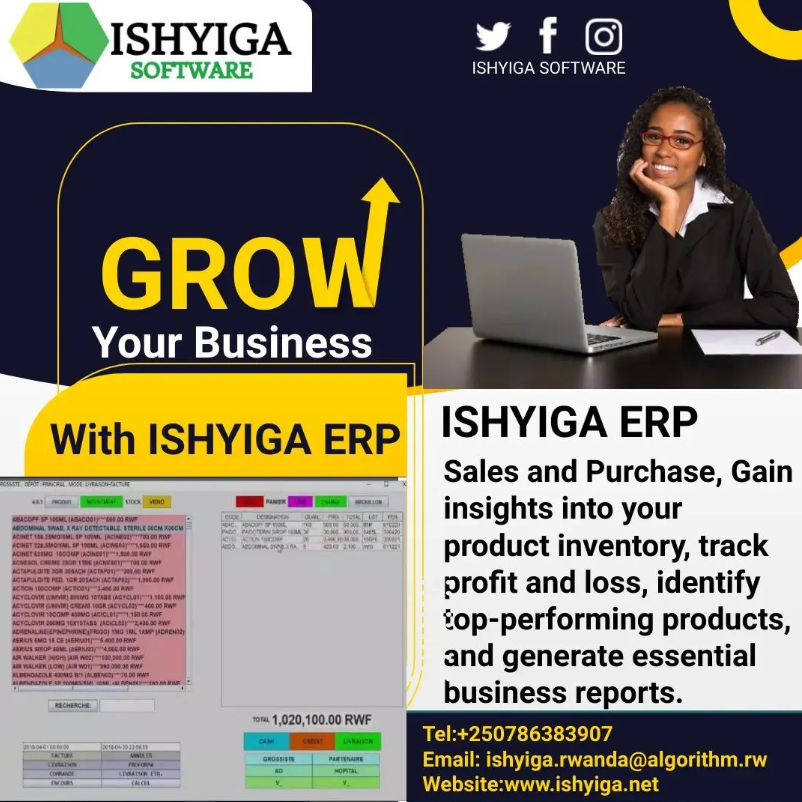
In today's fast-paced business environment, efficiently managing stock and sales operations is crucial for large companies that supply other businesses. Enter Ishyiga ERP (Enterprise Resource Planning) – a comprehensive solution designed to streamline these critical business functions. Ishyiga ERP offers an array of features that enable businesses to monitor and maintain stocked products, generate detailed reports, and manage sales with unparalleled efficiency. If you're looking to optimize your stock and sales management, Ishyiga ERP is highly recommended.
Key Features of Ishyiga ERP
ERP Stock
The ERP Stock interface is a robust tool for effective stock management, ensuring that your inventory processes are seamless and efficient. Here are some of the key functionalities:
- Batch Number Tracking: Monitor the batch numbers of items to ensure traceability and quality control.
- Order Creation (Commandes): Simplify the process of creating and managing orders, reducing errors and saving time.
- Supplier Management: Add new suppliers with ease and set sales prices to maintain accurate pricing and supplier relationships.
- Calculations and Reports: Perform essential calculations and generate detailed supplier reports to keep your stock data organized and actionable.
- Transfer Management: Efficiently manage the transfer of stock between different locations, ensuring that your supply chain remains uninterrupted.
ERP CAISSE
Ishyiga Import Sales, a component of the Ishyiga ERP suite, focuses on customer interactions and sales management. This module offers a variety of functionalities tailored to enhance client-facing operations:
- Deliveries and Proformas: Manage deliveries and create proforma invoices to streamline the sales process.
- Invoice Transformation: Easily convert proformas and other preliminary documents into finalized invoices, ensuring accurate billing and record-keeping.
- Daily Sales Reports: Generate comprehensive daily sales reports to track performance and make informed decisions.
- Client-Centric Features: Access a wide range of functionalities designed to improve customer satisfaction and operational efficiency.
Conclusion
Ishyiga ERP is an indispensable tool for large businesses looking to streamline their stock and sales management processes. With its powerful ERP Stock and ERP CAISSE modules, Ishyiga ERP provides a comprehensive solution that covers all aspects of inventory and sales operations. By adopting Ishyiga ERP, companies can enhance their operational efficiency, improve accuracy, and ultimately drive growth and profitability.
Investing in Ishyiga ERP is a strategic decision that can help your business stay ahead in a competitive market. Embrace the power of Ishyiga ERP and take control of your stock and sales management today. Visit our website and explore the Ishyiga ERP page.