






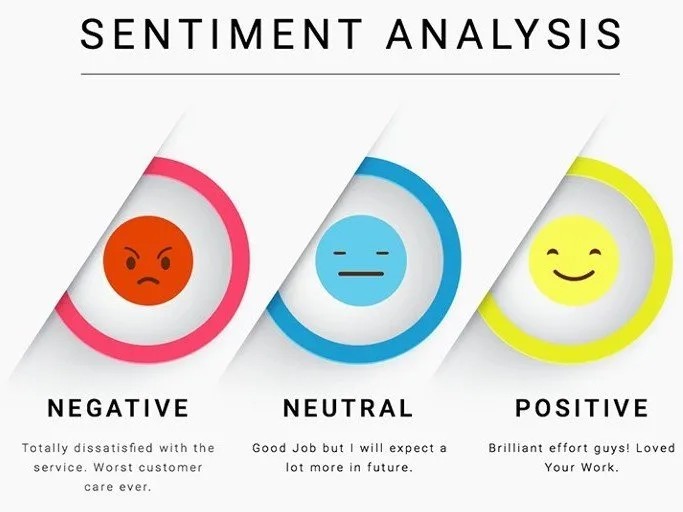


Cryptocurrency is a highly dynamic and fast-moving market, and understanding the sentiments of traders and investors is crucial for making informed investment decisions. Sentiment analysis, also known as opinion mining, is the process of computationally identifying and categorizing opinions expressed in text data, such as social media posts, news articles, and forum discussions. In the world of cryptocurrency, sentiment analysis is used to understand the opinions and emotions of market participants and to gauge the overall market mood.
Why is Sentiment Analysis Important in Cryptocurrency?
Sentiment analysis in cryptocurrency is essential as it provides a glimpse into the minds of market participants, including investors, traders, and influencers. This insight helps to understand the underlying sentiment driving the market, which can be used to make more informed investment decisions.
For instance, a positive sentiment among traders and investors towards a particular cryptocurrency can indicate that its value is likely to increase in the near future, making it a good investment opportunity. On the other hand, a negative sentiment can signal that the market is not confident in the future prospects of a particular cryptocurrency, making it a less attractive investment opportunity.
How is Sentiment Analysis Performed in Cryptocurrency?
Sentiment analysis in cryptocurrency is performed using Natural Language Processing (NLP) and machine learning algorithms. NLP is used to extract and categorize the opinions expressed in text data, while machine learning algorithms are used to train models to accurately predict
sentiment from the extracted data.
The process of sentiment analysis in cryptocurrency typically involves the following steps:
1. Data Collection: The first step is to collect relevant text data, such as social media posts, news articles, and forum discussions, related to a particular cryptocurrency.
2. Data Preprocessing: The collected text data is then preprocessed to remove any irrelevant information, such as URLs and special characters.
3. Sentiment Analysis: NLP techniques and machine learning algorithms are then used to categorize the sentiment expressed in the text data as positive, negative, or neutral.
4. Visualization: The sentiment analysis results are then visualized in the form of charts and graphs to make it easier to understand the overall market sentiment.
Benefits of Sentiment Analysis in Cryptocurrency
1. Improved Investment Decisions: By providing insight into the sentiments of market participants, sentiment analysis in cryptocurrency can help investors make more informed investment decisions.
2. Early Warning System: Sentiment analysis can also act as an early warning system, alerting investors to potential market changes based on the sentiment expressed in the market.
3. Better Market Understanding: Sentiment analysis provides a deeper understanding of the market, including the opinions and emotions of traders and investors, which can be used to make better investment decisions.
Conclusion