Color LogoLoading...

🌍 Feed

✍🏿 Compose

Cost of data breaches in SA surged by 73% in last 8 years, according to IBM report 🇿🇦

#economy
#research
#security
#cyber security
South Africa has one of the highest costs of data breaches in the world, according to a study by IBM Security. According to IBM Security’s annual “Cost of a Data Breach” report, the average data breach cost for South African organizations reached an all-time high of R49.45 million in 2023. This is an 8% increase over the last 3 years, and a 73% increase since South Africa was added to the report 8 years ago.

According to a study by IBM Security, the cost of data breaches in South Africa has surged by 73% over the past 8 years, making it one of the countries with the highest data breach costs globally. The average data breach cost for South African organizations reached an all-time high of R49.45 million in 2023, an 8% increase over the last 3 years.


The financial services sector bore the brunt of data breaches, experiencing the highest average cost of R73.1 million, followed by the industrial and services sectors with R71.37 million and R58.78 million, respectively.


The report highlights that stolen or compromised credentials and phishing scams are the most common initial attack vectors, constituting 14% each of cyber threats. Attacks through compromised business emails accounted for 12%, while attacks due to cloud misconfiguration made up 11%.


AI and automation have proven to be significant factors in speeding up breach identification and containment. Organizations in South Africa that extensively used both AI and automation experienced a data breach lifecycle 95 days shorter than those without these technologies (190 days versus 285 days). However, only 28% of the studied organizations have extensively implemented security AI and automation.


Studied organizations that deployed security AI and automation extensively saved an average of nearly R10.49 million in data breach costs compared to those that did not use these technologies.


To address the growing cyber threat landscape, organizations in South Africa are urged to modernize their perimeter security strategies, implement zero-trust security solutions underpinned by AI and automation, and comply with data privacy policies like the Protection of Personal Information Act (POPIA). Early detection and fast response are crucial in reducing the impact of breaches, and investments in AI and automation can significantly enhance detection and response speeds.


South Africa leads the continent in the number of identified cybersecurity threats, with 230 million total threat detections, as reported by INTERPOL's 2022 Africa Cyberthreat Assessment report. The country also ranks third globally in the number of cybercrime victims, with an annual cost of R2.2 billion, according to research by Accenture.


Read more on TechCabal
Top comments(0)

SEND

You may like this too...

TechCabal

Kobo360, the logistics powerhouse backed by Goldman Sachs, is rolling out HaulSight—an innovative fleet management software designed to help Africa’s major manufacturers streamline operations, track vehicles, and cut costs in real-time. With rising fuel prices squeezing margins, HaulSight presents an efficient way for companies like Dangote and Unilever to maximize fleet potential. Will this be a game-changer for Africa's logistics industry?
Nov 11, 2024

Disrupt-Africa

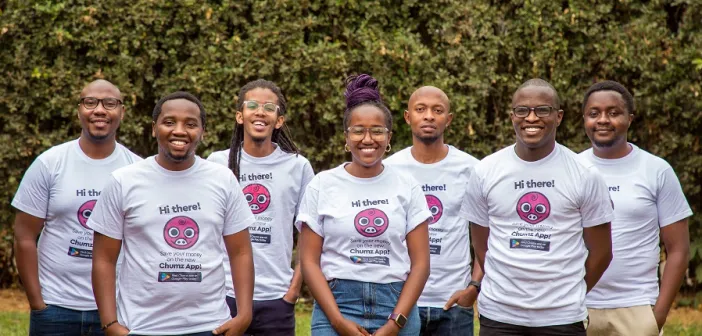
Chumz, a Kenyan fintech that enables users to set savings goals with mobile money, has reached 200,000 users and is testing its services in Rwanda. With unique prompts encouraging behavior-based saving, Chumz empowers users with accessible financial tools. Expansion plans target 1 million users across East Africa by 2026.
Nov 6, 2024

Bird Story Agency

As more and more services move online across Africa, giant players like Safaricom, MTN and Airtel are stepping up their efforts to provide Africa with large, green-energy data centres.
Nov 4, 2024

Bird Story Agency

Africa's Gen Zs, promised opportunity, innovation and new technology but faced with the very real world of a workplace in flux, constrained labour markets, high inflation and increasing criticism of their work ethic, are finding very little to cheer about. So a growing number of African universities are stepping in, hoping to bridge the gap between academic qualifications and real-world demands.
Nov 3, 2024

TechCabal

🌍 Access Bank secures the green light to acquire Kenya's National Bank, expanding its reach across East Africa’s largest economy. With an estimated $100 million deal, Access Bank will increase its footprint to 77 branches across 28 counties. Here’s what this move means for Kenya’s banking sector! 💸
Oct 31, 2024

Disrupt-Africa

Nigerian fintech leader Moniepoint has secured $110 million in Series C funding to supercharge its digital banking platform for businesses across Africa. With a track record of innovation and impact, Moniepoint is poised to transform financial access on the continent, bringing seamless banking, payments, and credit services to millions.
Oct 29, 2024

TechCabal

Stanbic Bank Kenya has completed a major upgrade of its core banking software, aiming for enhanced security and improved user experience. Despite brief service disruptions, the bank’s transition to the latest technology signals a drive for modernized banking in a competitive market.
Oct 27, 2024

TechCabal

Kenya is set to revolutionize its financial landscape with the introduction of a new Fast Payment System (FPS). This cutting-edge platform will ensure seamless transactions between banks and fintechs, eliminating existing barriers. The FPS promises to enhance accessibility, making financial services more convenient for all Kenyans.
Oct 18, 2024

TechCrunch

🌍 From humble beginnings in Africa, InstaDeep has grown into a global AI powerhouse. In just over a year under BioNTech’s umbrella, the startup continues to drive innovation in biotech and beyond. CEO Karim Beguir reveals how InstaDeep’s cutting-edge AI is revolutionizing healthcare and industrial optimization alike.
Oct 15, 2024

TechCabal

M-KOPA, a Kenyan fintech giant known for financing solar systems and smartphones, has appointed former Nokia CEO Rajeev Suri as its new board chair. As the company gears up for rapid expansion, Suri's leadership is set to guide M-KOPA into a new era of growth and innovation. With over 5 million users across Africa, M-KOPA is reshaping digital and financial inclusion.
Oct 14, 2024
Home
Business Hub
Market Hub
You
By signing up you agree to ourTerms|About us|Market Hub|Business Hub|Deals Hub